Vault Secrets Operator Becomes New Standard for Kubernetes Secret Management as HashiCorp and Red Hat Deepen Partnership
HashiCorp and Red Hat have officially designated the Vault Secrets Operator (VSO) as the recommended approach for injecting and managing secrets in Kubernetes and OpenShift environments, marking a significant shift from the previously dominant sidecar agent injector. This change addresses long-standing security and operational challenges faced by platform teams scaling secrets across hybrid clouds.
"The Vault Secrets Operator offers a truly Kubernetes-native way to automate the entire secret lifecycle—from generation to rotation—without slowing down development," said Sarah Chen, VP of Product at HashiCorp. "This is a direct response to enterprises who found that native Kubernetes Secrets and older sidecar patterns couldn't meet governance needs at scale."
The Security Gap That Drove the Change
For years, platform teams managing Kubernetes struggled to balance security controls with development velocity. Native Kubernetes Secrets, while simple, lack enterprise-grade lifecycle management, encryption at rest, and audit capabilities. As clusters multiplied across clouds, the problem shifted from "how to get a secret into a pod" to "how to manage the full lifecycle without blocking developers."
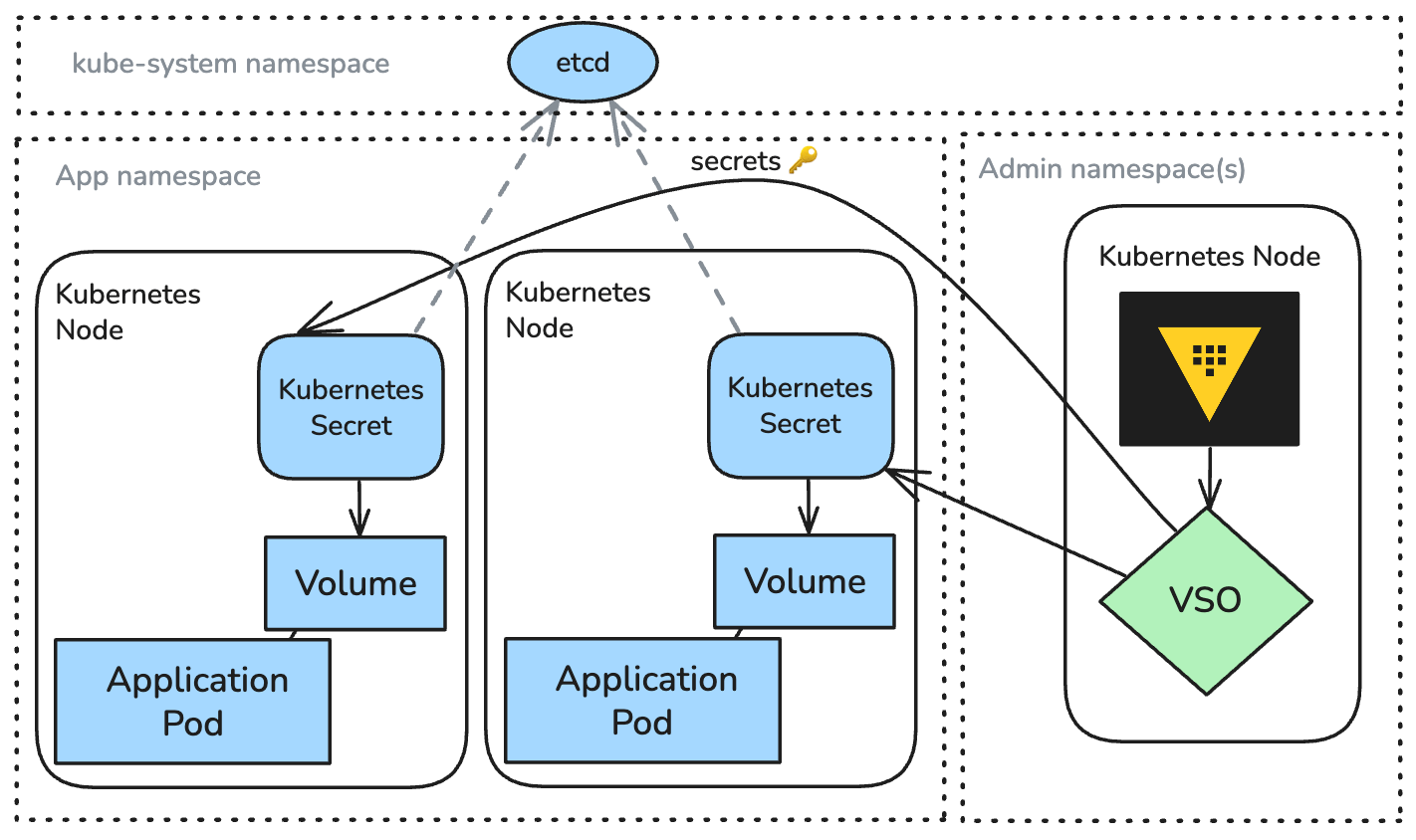
Red Hat OpenShift, though built on Kubernetes, inherited these same gaps. "OpenShift made huge strides in security, but the underlying secret management challenges remained," explained Mark Torres, Principal Architect at Red Hat. "We needed a consistent, platform-agnostic solution that works both inside and outside Kubernetes."
Multiple Integration Methods — One Clear Winner
Historically, teams defaulted to the Vault sidecar agent injector, which intercepts pod creation to deliver secrets. While robust, it introduced operational complexity, resource overhead, and tight coupling to Vault infrastructure. Other options include the Secrets Store CSI Driver (SSCSI), third-party operators, and VSO itself.
According to HashiCorp's analysis, VSO outperforms alternatives on three key dimensions: security (no secrets written to etcd), performance (operator-native reconciliation), and developer experience (same familiar secrets API). The built-in CSI companion driver, VSO Protected Secrets, adds an extra layer of encryption for organizations with strict compliance requirements.
Key Comparison: VSO vs. Sidecar Injector
- Sidecar Injector: Works via mutating webhooks; stores secrets in memory; requires manual rotation scripts; legacy pattern.
- VSO: Uses Kubernetes custom resources; leverages Vault's native secret rotation; no sidecar overhead; fully declarative.
"The sidecar injector served its purpose, but VSO eliminates 90% of the boilerplate and security risks," said Chen. "Enterprises running thousands of pods can now sleep easier."
Background: The Evolution of Vault-Kubernetes Integration
HashiCorp Vault has been the enterprise standard for centralized secrets management for years. Its integration with Kubernetes evolved through multiple generations: first the sidecar injector, then the Secrets Store CSI Driver, and now VSO. The partnership between HashiCorp and Red Hat—intensified after IBM's acquisition of Red Hat—accelerated development of Kubernetes-native patterns.
The Vault Secrets Operator was first introduced as a community project in 2021 and reached general availability in early 2023. It is now bundled with Red Hat OpenShift as a certified operator, making it the default choice for new deployments.
What This Means for Platform Teams
For platform engineers, VSO means simpler secret lifecycle automation, reduced operational burden, and better security posture. Developers continue interacting with secrets as Kubernetes Secrets objects, but VSO ensures those secrets are dynamically synced from Vault, rotated on schedule, and never persisted in etcd in plaintext.
"Adopting VSO doesn't require changing how pods consume secrets—it just changes how secrets arrive," Torres noted. "That's a huge win for reducing friction."
Enterprises should prioritize migrating from sidecar injectors to VSO in the next 12 months. The sidecar injector is still supported but will enter maintenance mode as HashiCorp focuses operator development. For teams already using the CSI driver, VSO offers a more direct integration with fewer moving parts.
The broader industry trend is clear: Kubernetes-native operators are replacing sidecars and external components. VSO aligns with that direction, enabling platform teams to finally treat secrets as first-class Kubernetes resources while maintaining enterprise-grade governance.
"This isn't just a technical upgrade—it's a strategic shift in how we think about security and developer productivity in cloud-native environments," Chen concluded.