Artemis III: A Critical Earth Orbit Test Paving the Way for Lunar Landings
NASA's Artemis III mission, scheduled for next year, is a pivotal crewed flight that will test rendezvous and docking capabilities in Earth orbit between the Orion spacecraft and commercial landers from Blue Origin and SpaceX. This mission, announced in February 2026, serves as a stepping stone to the Artemis IV lunar landing, reducing risk by integrating new hardware and team dynamics. Engineers have been evaluating various mission profiles and operational considerations to ensure this test flight meets its objectives. Below, we answer key questions about this highly complex mission.
What is the primary purpose of the Artemis III mission?
Artemis III is designed to demonstrate critical systems needed for a future lunar landing, specifically by testing rendezvous and docking in Earth orbit. Unlike later missions, Artemis III will remain in Earth orbit, using a spacer (a mass simulator) instead of the interim cryogenic propulsion stage as the rocket's upper stage. This allows NASA to evaluate how Orion, the crew, and ground teams interact with commercial lander hardware from Blue Origin and SpaceX before committing to a lunar surface mission. The goal is to reduce risk for Artemis IV, where humans will land near the Moon's South Pole and begin building a base.
Why is Artemis III conducted in Earth orbit rather than around the Moon?
Conducting Artemis III in Earth orbit provides a safer, more controlled environment to validate new technologies and operational procedures. It allows NASA to test rendezvous and docking maneuvers with two different commercial landers without the added complexity of lunar distance and communication delays. This approach also enables a faster development timeline, as the mission can launch next year using existing hardware with minimal modifications. By simulating key aspects of a lunar mission in Earth orbit, NASA can identify and resolve issues early, ensuring that the Artemis IV lunar landing has a higher chance of success and crew safety.
What is the spacer, and how does it replace the upper stage?
The spacer is a mass simulator that takes the place of the interim cryogenic propulsion stage (ICPS) on the SLS rocket for Artemis III. It has the same overall dimensions and interface connection points as the ICPS, fitting between the Orion stage adapter and the launch vehicle stage adapter, but contains no propulsive capabilities. This design allows the rocket to maintain its structural integrity and mass distribution while testing the core stage and boosters. By using a spacer, NASA avoids the cost and complexity of an active upper stage for a mission that does not require its propulsion, since Orion will circularize its orbit using the European-built service module. The spacer is currently being fabricated at Marshall Space Flight Center in Huntsville, Alabama.
Who are the commercial partners involved, and what will they provide?
Artemis III involves two commercial lander providers: Blue Origin and SpaceX. Both companies are developing lunar landers under NASA's Human Landing System (HLS) program, but for this Earth orbit mission, they will provide their respective spacecraft for docking tests with Orion. Blue Origin's Blue Moon lander and SpaceX's Starship (in a modified configuration) will each demonstrate rendezvous and docking capabilities in Earth orbit. This marks the first time NASA will coordinate a launch campaign with multiple spacecraft from different providers, integrating new capabilities into Artemis operations. The experience gained will be invaluable for future missions where these landers will carry astronauts to the lunar surface.
What are the key objectives and milestones for Artemis III?
The mission has several critical objectives: launch the SLS rocket with Orion and four crew members from Kennedy Space Center; demonstrate Orion's ability to rendezvous and dock with two different commercial landers in Earth orbit; test communications, navigation, and crew procedures for multi-spacecraft operations; and evaluate the spacer's performance during ascent and orbit insertion. After launch, Orion will use its European service module to circularize its orbit. The crew will then perform a series of docking exercises with the Blue Origin and SpaceX landers, each lasting several days. Data from these tests will inform mission planning for Artemis IV, including timelines, fuel usage, and crew training requirements. Ground teams will also practice coordinating simultaneous operations with multiple partners.

How is the spacer being built, and where does fabrication stand?
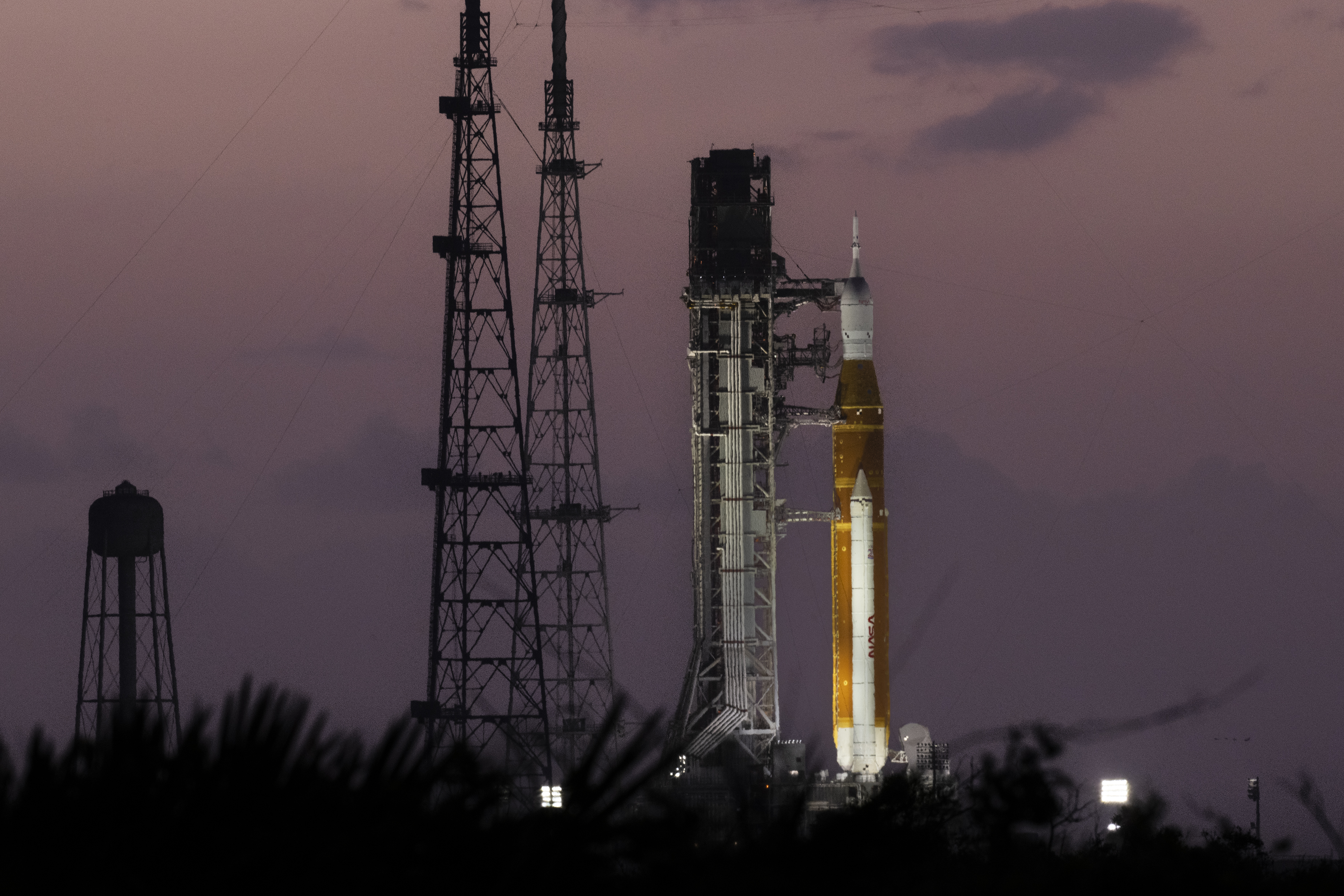
Design and fabrication of the spacer are progressing rapidly at NASA's Marshall Space Flight Center in Huntsville, Alabama. The spacer consists of a barrel section with upper and lower rings, made from aluminum alloy. As of May 2026, machining of the barrel material and rings is underway, preparing the components for welding. The spacer will be assembled and tested before shipment to Kennedy Space Center for integration with the SLS rocket. This fabrication is being expedited to meet the aggressive launch timeline for Artemis III. Meanwhile, the Artemis III core stage is already in High Bay 2 of the Vehicle Assembly Building at Kennedy, with the core stage tank attached to its engine section, as seen in a May 12, 2026 image.
How does Artemis III prepare for the Artemis IV lunar landing?
Artemis III serves as a critical risk-reduction pathfinder for Artemis IV. By demonstrating rendezvous, docking, and integrated operations with two commercial landers in Earth orbit, NASA can validate procedures and hardware before sending astronauts to the Moon's South Pole. The mission will also test the coordination of multiple spacecraft launch campaigns and ground team interactions. Lessons learned about docking mechanisms, crew workload, and communication protocols will directly apply to Artemis IV, where Orion will dock with a lander in lunar orbit before descending to the surface. Furthermore, the experience with the spacer helps refine future SLS configurations. Jeremy Parsons, Moon to Mars acting assistant deputy administrator, emphasized that Artemis III is "one of the most highly complex missions NASA has undertaken" and a crucial step toward building a Moon Base during Artemis IV.